
UNSW researchers develop self-healing silicon solar cells
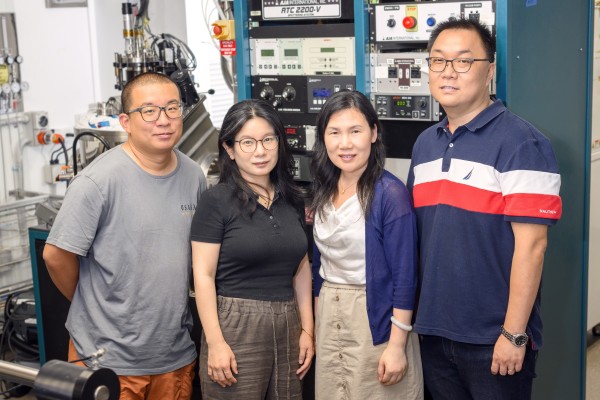
Researchers at the University of New South Wales Sydney (UNSW) have developed a monitoring method that reveals how ultraviolet (UV) radiation damages silicon solar cells and how those cells can naturally recover under normal sunlight.
The technique allows engineers to observe chemical changes inside high-efficiency silicon solar cells at a microscopic level while the cells are operating. The researchers say the approach could reshape how solar panels are tested, designed and certified for long-term outdoor use.
ADVERTISEMENT
The research, led by UNSW Sydney Scientia Professor Xiaojing Hao and published in Energy and Environmental Science, uses ultraviolet Raman spectroscopy to directly track material-level changes as solar cells degrade under UV exposure and recover under visible light.
“This method can be used directly on the production line to quickly check how well solar cells resist UV damage. That makes it useful for future quality control during manufacturing,” Professor Xiaojing says.
Silicon solar cells are known to suffer efficiency losses over time due to ultraviolet-induced degradation (UVID), with previous accelerated testing showing performance drops of up to 10% after the equivalent of 2,000 hours of UV exposure. While partial recovery under normal sunlight has been observed electrically, the underlying material processes have remained poorly understood.
The team, including Dr Ziheng Liu, Dr Pengfei Zhang and Dr Caixia Li, addressed this gap by developing a non-destructive monitoring technique capable of tracking chemical bonding changes inside a working solar cell in real time.
“This technique works a bit like a camera. Instead of just measuring power output, we can directly see how the material itself is changing as it happens,” Dr Ziheng says.
Using UV Raman spectroscopy, the researchers observed how UV exposure reconfigured chemical bonds involving hydrogen, silicon and boron atoms near the cell surface, weakening material quality and reducing performance. When the cells were later exposed to visible light, the team observed hydrogen migrating back toward the surface and damaged bonds being repaired.
“This confirms that recovery is not just an electrical effect. The material itself is repairing at the atomic level,” Dr Ziheng says.
The findings have important implications for accelerated ageing tests, which are commonly used to certify solar panels. If some UV-induced changes are reversible under real-world conditions, current testing standards may overestimate long-term degradation.
Beyond testing, the researchers say the method could be used to rapidly screen materials and designs during manufacturing, offering feedback in seconds rather than days or weeks. The study was supported by the ARC Research Hub for Photovoltaic Solar Panel Recycling and Sustainability (PVRS).
-
ADVERTISEMENT
-
ADVERTISEMENT
