
The cheaper home batteries boom: Big promise, bigger pressure and real risks ahead
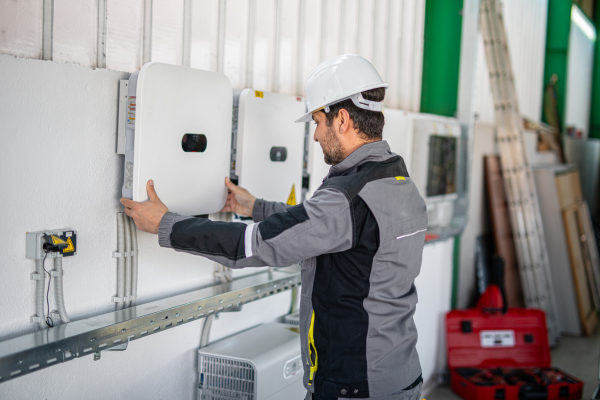
Australia’s Cheaper Home Batteries Program, launched on 1 July 2025, is a landmark national investment in household energy resilience. By offering around 30% off eligible home battery installations through Small-scale Technology Certificates (STCs), the scheme is designed to accelerate residential electrification, support virtual power plants (VPPs) and strengthen the grid during peak demand. According to the Federal Government, the goal is simple: Make energy storage mainstream.
But the early months of the program reveal a perfect storm of booming demand, stretched inspection capacity, a flood of new battery products, inexperienced installers joining the market and inconsistent enforcement by state electrical regulators.
ADVERTISEMENT
Combined, these pressures have created a rapidly expanding but increasingly fragile ecosystem, one that is leaving consumer advocates and industry observers uneasy.
Subsidy-fuelled demand: A boom like nothing before
The scale of uptake has taken many by surprise. Installers across the country report being booked out for two to four months, with some households unable to secure installation until early next year. Much of this demand is driven not just by the magnitude of the subsidy, but by concerns that the rebate will decline significantly after 2026.
But one of the loudest warnings has come from SolarQuotes, which suggests the program’s $2.3 billion funding pool could run dry as early as mid-2026, years before its intended end date in 2030. Their analysis notes that the average battery being installed is around 20kWh, meaning rebate amounts are higher per household than originally modelled. If demand continues at its current pace, tens of thousands of customers who planned to rely on the rebate could be left stranded.
If that happens, the industry could face a whiplash effect: A boom followed by an abrupt downturn, particularly for newer installers who rely heavily on subsidised demand.
A flood of new installers (and variable quality)
Unsurprisingly, the promise of high-volume, high-value work has produced a rush of new installer entrants. Many are skilled and reputable. But others are new to battery installations, inexperienced with complex hybrid systems or lacking in the design expertise needed for safe and efficient storage solutions.
In the solar industry, similar booms historically led to a spike in poor-quality installations, incomplete jobs and companies disappearing before honouring warranties. Battery systems are more complex than solar, and carry higher voltage and fire risks, making the stakes even greater.
For consumers, this creates a “buyer beware” environment at exactly the moment when they are most vulnerable to poor advice or substandard workmanship.
Inspection rates: The CER faces a mountain
The Clean Energy Regulator (CER) is responsible for verifying that installations claiming STCs meet safety, design, and product eligibility standards. But with battery uptake skyrocketing, experts worry that inspection capacity may lag far behind installation rates.
Unlike rooftop solar, which has more than a decade of mature regulation and a well-established inspection regime, home batteries are still a relatively new and rapidly evolving product category. They involve more sophisticated electrical work, more stringent installation standards and potentially dangerous energy densities.
If thousands of installations occur each month but only a small percentage are inspected, the risk of faulty or unsafe systems slipping through increases dramatically. And with many new entrants in the installation market, the probability of non-compliant work is almost certain to rise.
Product approvals: CEC faces a wave of new battery models
Another pressure point is the sheer volume of new battery models entering the Australian market.
In the first half of 2025 alone, the Clean Energy Council (CEC) received 261 applications for new battery products and approved 182 of them. Today, there are more than 1,000 lithium-based battery models on the approved list, an unprecedented level of variety.
Choice is good for consumers, but this wave of new products brings risks:
- Many brands lack long-term performance data.
- Warranty structures differ widely; some offer firm long-term backing, others rely on small importers with uncertain longevity.
- Quality differences are difficult for consumers to assess.
The result? Households may unwittingly choose cheaper but unproven systems that fail early, degrade rapidly, or lack reliable after-sales support.
State electrical regulators: The weak link in enforcement?
Oversight of electrical licensing, safety, and enforcement falls to state electrical regulators, and their performance varies dramatically across Australia.
Proactive states
Queensland and Victoria tend to run strong, well-resourced inspection regimes, actively prosecuting poor electrical work and removing operators who consistently breach standards.
Reactive states
Others rely too heavily on consumer complaints, conduct limited field audits, or have slow enforcement processes that allow poor installers to operate for years before meaningful action is taken.
The danger is clear: a battery installer who is failing inspections in one state may simply shift operations to another with weaker oversight.
Given the size and potential hazard of battery systems — including fire risks and high-voltage faults — the need for nationally consistent, assertive electrical regulation has never been greater.
Consumer protections: Safe installation is not the same as good design
A major gap in the current framework is that no regulator is responsible for ensuring good system design.
- A battery may be installed safely yet be poorly sized.
- It may never fully charge if paired with an undersized solar system.
- It may deliver negligible value in a VPP.
- It may struggle during peak load if the system architecture is flawed.
Electrical safety regulators check electrical wiring, earthing and compliance, not payback periods, battery cycling efficiency or whether the system matches the household’s energy profile.
Consumers therefore face significant risks from misleading advice, poorly designed systems or overly aggressive sales tactics.
Australia may need a new framework, perhaps akin to solar’s performance guarantees, to ensure consumers receive not just safe installations, but systems that actually deliver the promised benefits.
Conclusion: A transformative program that needs stronger guardrails
The Cheaper Home Batteries Program has unleashed innovation, consumer enthusiasm and huge investment, but also significant risk. Funding uncertainty, variable installer quality, overwhelmed inspection regimes, a flood of unproven products and inconsistent regulator oversight threaten to undermine confidence in the rollout.
The program could transform Australia’s energy landscape. But to succeed, it must be accompanied by stronger inspections, national regulatory coordination, stricter installer vetting and improved consumer protections.
The opportunity is enormous, but so is the responsibility to get it right.
This article was written by NECA director, policy, technical and safety, Neil Roberts.
-
ADVERTISEMENT
-
ADVERTISEMENT
