
Fuji SMBE Macquarie switchboards power $835m John Hunter Health and Innovation Precinct redevelopment
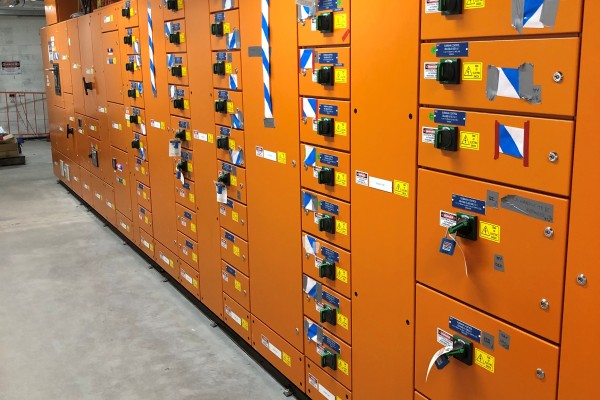
The NSW Government’s $835 million redevelopment of the John Hunter Health and Innovation Precinct (JHHIP) is one of the state’s largest healthcare infrastructure projects, requiring electrical systems capable of delivering continuous, reliable performance in one of NSW’s busiest hospital environments.
As home to a major emergency department and critical acute services, the eight-level facility demands electrical infrastructure designed for safety, resilience and long-term operational continuity.
ADVERTISEMENT
Lead electrical contractor Star Electrical was responsible for sourcing switchboards that could meet strict compliance, program and budget requirements across the multi-year project.
“We chose to source all switchboards for the JHHIP project from Fuji SMBE Macquarie because we consider them a tier-one board builder that can deliver high-quality product at scale, within tight timeframes,” Star Electrical project manager – construction Robbie Peel says.
All switchboards supplied were manufactured and assembled in Australia and designed and verified in accordance with AS/NZS 61439. The scope included approximately 14 large low-voltage main switchboards and more than 130 miscellaneous distribution boards installed throughout the facility.
“AS/NZS 61439 mandates rigorous design verification to ensure safety, reliability and performance. For a major government healthcare project of this importance, compliance with the standard was essential,” Robbie says.
The primary equipment supplied was a commercial low-voltage main switchboard (LV MSB), used for the distribution, control and protection of electrical power across the hospital. The switchboards supply downstream distribution boards and final subcircuits while supporting safe operation, coordinated protection and maintainability within a high-fault-level environment.
Designed specifically for healthcare applications, the switchboards incorporate formed construction, fully type-tested switchgear, short-circuit withstand ratings suited to site conditions and clear circuit identification to support safe installation, commissioning and ongoing maintenance. These features help minimise downtime and ensure operational continuity in critical clinical environments.
The modular switchboard design also allowed the contractor to accommodate evolving clinical and operational needs over the project’s four-year timeline.
Customisations included bespoke compartment layouts and dimensions, integration of metering and monitoring equipment, site-specific ingress protection ratings, building management system interface provisions and allowances for future load growth, all delivered while maintaining compliance with Australian and New Zealand standards.
“Hospitals have very specific operational requirements, both now and into the future. Having switchboards that are adaptable, while still meeting stringent safety and compliance obligations, was essential for this project,” Robbie says.
Local manufacturing supported quality assurance, reduced supply chain risk and ensured long-term access to technical support and spare parts. Technical assistance during installation and commissioning, along with comprehensive documentation and test reports, was also provided to support ongoing maintenance and future upgrades.
As major healthcare infrastructure investment continues across NSW, the JHHIP redevelopment highlights the integrity of robust, flexible and locally manufactured electrical systems designed to perform reliably in critical clinical environments for decades.
-
ADVERTISEMENT
-
ADVERTISEMENT
