
Designing smart homes for neurodivergent residents
Neuro-inclusive systems aren’t just better for individuals; they’re better for everyone. Paul Skelton writes.
In a market crowded with touchscreens, voice control, AI-driven routines and sensor-laden spaces, smart home integration often leans toward the futuristic. It promises convenience, elegance and even the thrill of novelty. But as this technology evolves, so too must our approach. The real future of smart home design lies not in spectacle, but in empathy. And perhaps nowhere is that more urgent than in designing for neurodivergent residents.
ADVERTISEMENT
Whether it’s autism, ADHD, dyslexia, dyspraxia or sensory processing differences, neurodivergence affects how individuals engage with their environments in profound ways. Some people thrive on structure and routine. Others experience heightened sensitivity to noise, lighting or unpredictable changes.
A solution that feels seamless to one person may feel confusing or even hostile to another. For many neurodivergent people, conventional smart home design – with its endless options, reactive triggers and invisible logic – can become overwhelming, alienating or even dangerous.
Neurodivergence is not one thing. It is a spectrum of experiences, challenges and strengths. According to Australia’s Bureau of Statistics, around 3.6% of Australians are formally diagnosed with autism, and that figure has nearly doubled in the past decade. ADHD affects an estimated 6.8% of children and around 2.8% of adults in Australia. And many others live with undiagnosed or less visible forms of cognitive diversity. Globally, the Centers for Disease Control (CDC) estimates that at least one in six children is neurodivergent in some way. The reality is that most smart home professionals will work with neurodivergent individuals, whether they know it or not.
Yet despite the scale, neuro-inclusive design remains niche in the smart home world. Too often, systems are designed for tech-savvy, neurotypical users who adapt easily to complexity. But adaptation is a privilege. For neurodivergent residents, what’s needed isn’t simplification for the sake of it; it’s meaningful tailoring that empowers them to feel safe, in control and at ease.
Good design begins with asking better questions. And with listening. Every neurodivergent person is different. What soothes one may overstimulate another. One resident might rely on precisely timed lighting cues to regulate their sleep. Another may need full manual control with no surprises. A child with ADHD might find dynamic visual scenes helpful for focus, while an autistic adult may prefer low-stimulation spaces that support quiet routines. The only universal rule is that there is no universal rule.
Instead of asking what technology can do, ask what the resident needs. What times of day are hardest? Which rooms trigger stress? What type of sensory input is calming, and what is aggravating? How do they feel about sound, light, colour and control? Do they want automation or do they need predictability? These aren’t just design questions. They’re invitations to build trust.
Lighting is often one of the most critical elements. Many neurodivergent people are especially sensitive to visual stimuli. Flickering fluorescent lights, harsh white LEDs or inconsistent brightness can cause discomfort, headaches or even panic. Smart lighting should prioritise warm, tunable white options. Indirect sources, wall washing and ambient glows can help reduce sensory overload. In some homes, lighting can support transitions – using colour temperature and intensity to guide someone from an active state to a relaxed one. A soft amber fade at bedtime, for example, can be more effective than any spoken reminder.
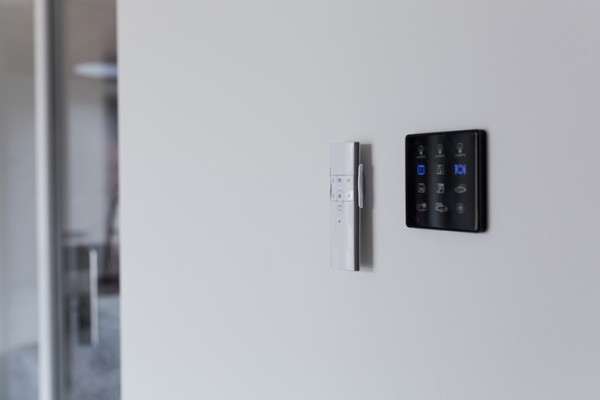
But as powerful as automation is, it should never remove personal agency. Some residents need to interrupt a routine when their internal state shifts. Providing physical keypads with clearly labelled buttons, or app interfaces with only a few core scenes, can offer a sense of control. What matters most is predictability. If a light doesn’t respond the same way each time, trust in the entire system starts to erode.
Audio design also demands thoughtful consideration. Sudden sounds can be jarring for many neurodivergent individuals. Motion-triggered music, hard volume jumps or poorly timed alerts may cause stress or confusion. If music is part of a routine, ensure fade-ins are used. Let residents disable audio cues with a single command. Build in ‘mute all’ functionality that’s easy to find and use. And just because a system supports voice control doesn’t mean it should rely on it. Not everyone finds talking to their home natural or intuitive.
That said, some neurodivergent residents may benefit from sound. White noise, ocean sounds, or low-frequency hums can help mask disruptive noise or regulate mood. Others may prefer silence entirely. The point is not to assume, but to ask and provide options. A smart audio system should be versatile enough to do both.
Routine-based automation can be transformative, especially for people who rely on consistency to reduce anxiety. This is often the case with autism, where predictable environments foster a sense of calm and confidence. Automated morning sequences that gently activate lights, open blinds and begin a playlist can help start the day with clarity. Evening wind-down routines can support rest. But the key is reliability. If a morning routine works Monday through Wednesday but fails on Thursday, the fallout might last the entire day. These residents need systems that are not just smart, but rock solid.
Another design principle is reducing cognitive load. Neurodivergent people often process information differently, and excessive complexity can be a barrier. On a touchscreen interface, this means limiting choices on each page, using intuitive icons, and avoiding rapidly shifting content or colours. Clarity is critical. Use plain language, consistent terminology and low-stimulation visuals. The most successful interface might be the one that does the least. Or, in some cases, not a screen at all. Tactile feedback can be more accessible than visual menus. A clearly marked switch labelled ‘relax’ may beat the most advanced tablet every time.
Privacy is another issue that deserves attention. Sensors, cameras and occupancy monitors may be helpful in some scenarios, such as fall detection or energy management. But for neurodivergent individuals, constant monitoring may feel invasive. If sensors are installed, be transparent about what they do. Provide clear ways to override or disable them. Let residents control their own environment instead of feeling watched by it.
In shared households, personalised profiles can help avoid conflict. What works for one resident may overwhelm another. A system that supports RFID tags, user profiles or room-specific settings allows each person to experience the environment on their terms. This is particularly valuable in group homes or families where multiple neurodivergent members live together.
Above all, these systems must be built with consent. Don’t surprise residents with new automations. Don’t install features they haven’t asked for. Just because something is technologically possible doesn’t mean it’s emotionally appropriate. The goal isn’t to wow the client. It’s to support them. And sometimes, support means removing features, not adding them.
This isn’t about designing less. It’s about designing better.
It’s worth remembering that the principles behind neuro-inclusive design benefit everyone. Stability, simplicity, transparency and control are not exclusive to any one user group. Neurotypical residents also benefit from predictable lighting, calm audio environments and interfaces that are easy to understand. These systems may be designed for neurodivergent users, but their positive impact is universal.
Smart homes are not just about convenience. They’re about comfort. They are extensions of the self. And for neurodivergent residents, that comfort depends on whether the home listens. Whether it respects boundaries. Whether it feels safe.
These projects take longer. They require more conversation, more customisation and more humility. You are not the hero of the story. The resident is. Your job is to listen and build tools that amplify their quality of life, not impose your own vision of what smart should look like.
And when done right, the results can be transformative. For some people, a smart home is not a luxury. It is a tool that supports independence, mental health and daily function. It helps them sleep, focus, relax and recover. It creates a sense of place where the world often feels disorienting.
It is not just helpful. It is life-changing.
-
ADVERTISEMENT
-
ADVERTISEMENT
