
Vehicle-to-grid: Are we still waiting?
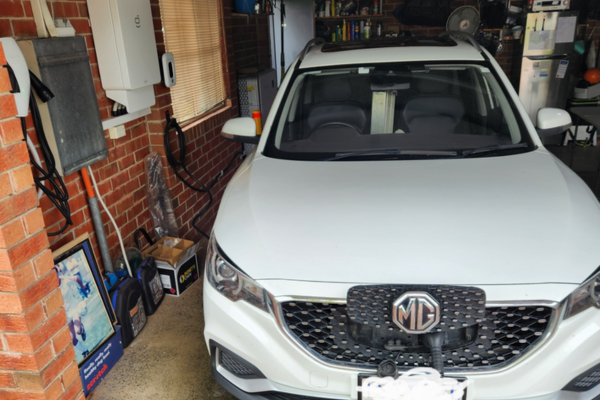
Vehicle-to-grid has been discussed as an additional benefit of EVs since at least 1997. Michael Shaughnessy explores where the conversation is at right now and if we’re still waiting.
Since we last spoke (in the last article of Driving Change for Electrical Connection), at least two vehicle-to-grid (V2G)-compliant products have received endorsement from the Clean Energy Council (CEC): Sigenergy and V2Grid Australia.
ADVERTISEMENT
The Sigenergy solution is a DC V2X unit using the CCS2 EV connector or plug. It sits behind the Sigenergy hybrid inverter, which already has AS/NZS 4777.2 certification. Being DC, it has certain advantages in that for a standard single-phase or three-phase residential network connection, it can service a quite high charging capacity of up to 12kW or 25kW, using either grid AC, solar DC, battery DC or all. Being on the DC bus, it is also not limited by the somewhat jerky nature of AC EV supply equipment (EVSE) trying to follow excess solar production, which goes in steps, eg, 6A, 8A, 10A etc. If you’re using a Sigenergy hybrid inverter, it adds about $6,000 to the cost.
The V2Grid Australia is another DC bit of kit, but it is a standalone EVSE with an AC connection, so it can offer 7kW single-phase or 22kW on three-phase. Not only do they have a CCS2 compatible unit, but also one for CHAdeMO, meaning the thousands of older generation Japanese EVs like the Nissan Leaf, that have been warranted for V2G all along, can finally have a bidirectional EVSE to suit. It goes for about $10,000.
There are other products currently waiting in the queue for CEC listing, such as StarCharge and Redearth. The sooner these can enter the market, the sooner we will see more price competition.
Compatibility is exploding
We see reports from various sources across Australia and the world that many EV models (30-plus) work fine on these bidirectional EVSE; if not, then the app interfaces could work a little more seamlessly and have more functionality.
Even I myself had to try my 2020 MG ZS EV on a Sigenergy unit to see if it would work, because I hadn’t seen such an ‘old’ EV tested anywhere else yet. It did discharge! Huzzah, but..
Warranty is still an issue
There is currently one battery EV advertised in Australia to support V2G, and therefore enjoys full warranty support, regardless of how much V2G you do. That is the Ford F150 Lightning, a behemoth of a ute, converted to right-hand drive here by AusEV and coming in at ~$125,000 and up, it’s not going to suit everyone.
Despite all of the other EV models that we know work with one or more of these bidirectional EVSE, if we were to use the capability too much without the manufacturer’s consent, they would be well within their rights to deny any warranty work on the battery, should anything go wrong.
It’s unlikely that anything would go wrong due to V2G; discharging at 25kW pales next to driving an EV, which can pull hundreds of kW depending on the model, but manufacturers seem keen to understand exactly what they’re up against, before letting drivers have at it.
V2G trials abound
To help EV manufacturers assure themselves that there’s no reason to limit V2G usage, several trials have recently been announced. The Origin trial will run with the BYD Atto 3 and StarCharge. The AGL trial will feature models from 100 lucky BYD, Hyundai, Kia and Zeekr owners.
Internationally, there are also agreements between BYD and Octopus Energy to offer AC V2G using the Zaptec charger.
Standards for the future
In practice, what I’ve talked about today will suit the early adopters. People who are willing to do some research on compatibility, seek an agreement from the EV manufacturer or engage in a trial, or use an older Japanese EV.
The standard ISO 15118-20 defines the way EVs communicate with EVSE, and enables V2G in a standardised and therefore interoperable way. This means that V2G EVs will work with any bidirectional EVSE, creating certainty for used car buyers and the ability to engage in V2G and public chargers, should the opportunity arise, without inconveniencing other drivers. If it continued that not all EVs worked with all bi-directional EVSE, it could hurt resale values.
The standard is also getting an amendment to better define AC V2G communications. In time, ISO 15118-20 will be adopted in Australia, meaning AC V2G hardware pairs (EV on board charger and wall box) will be able to be listed on the CEC-approved products list along with their DC counterparts.
AC V2G is touted to come with a cost advantage over DC, though if an electricity supply backup is desired at a premises or DC V2G bidirectional EVSE go transformer-less, this advantage may be eroded.
When talking EV chargers or solar/storage, to do right by your customers, these bidirectional EVSE need to be in the conversation.
The shift to EVs is undeniable, and ensuring that all Australians have the knowledge required to engage in V2G means they can confidently charge ahead into an electric future.
-
ADVERTISEMENT
-
ADVERTISEMENT
