
Supporting the astronomic growth of data centres in Australia
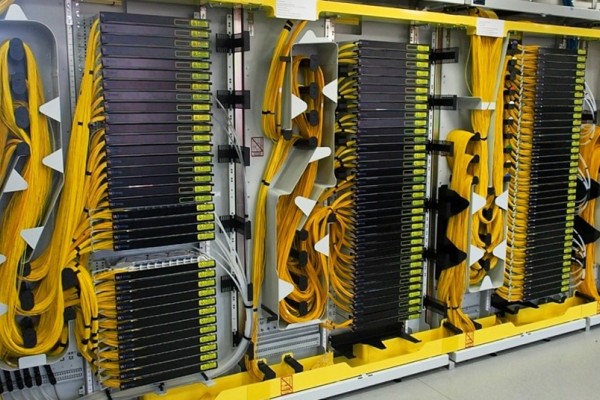
Electricians play a vital role in supporting data centres across the country. Sandy Mennie explores the industry’s role moving forward.
There has been a lot of discussion in the media recently about data centres (DCs), which is not surprising since there are over 200 of them located in Australia now, and this number is growing rapidly at over 10% per annum.
ADVERTISEMENT
This increasing demand for DCs is driven by the growing demand for cloud computing, big data analytics, and the Internet of Things (IoT), together with more common usages like streaming TV, as opposed to simply watching free-to-air.
Australia is a good and welcoming host to DCs for the following reasons:
DCs require access to economical, reliable, power… and lots of it
Australia is undergoing a major shift to renewable energy, establishing Renewable Energy Zones (REZs) nationwide. Supported by the National Electricity Market (NEM), these zones aim to harness economies of scale through strategic infrastructure and proximity to abundant wind and solar resources.
Locating DCs within these REZs is an emerging trend.
Investors in DCs look for a stable environment
Australia has a stable political environment, which is attractive to investors. Importantly, we are also in a region of low seismic activity located far from major tectonic fault lines, reducing the risk of service interruptions through earthquakes. Even our weather patterns are not that extreme compared to many places in the world.
Australia manufactures leading-edge space-saving cables and data centre management equipment
To help DCs be located close to the points of data consumption, there is a great deal of focus on shrinking the size of components that are used in DCs so that more can be accommodated in a smaller space.
High-quality cables are available in Australia through our member organisations
In particular, cables for data centre applications with improved fire performance are preferred as these cables limit the damage that could occur in the unfortunate event of a fire. These cables are not only fire retarding, but they are made from special materials that do not emit corrosive gases if they are exposed to a fire situation.
Working innovatively to reduce cable size
Fibre optic cables have been manufactured in Australia for the past 40 years, and in that time, the fibre counts have increased dramatically. A typical cable may have, in the early days, accommodated 12 fibres, whereas today, cables containing 1,720 fibres are routinely manufactured in Australia with options available up to 6,192 fibres.
Typically, DCs are full of fibre optic cables and this trend to reduce the physical sizes of cables while simultaneously increasing the number of fibres and hence the transmission density has allowed much higher density DCs to be built.
One of the ACI member companies has developed a range of extremely high fibre density optical distribution frames (HDODF) for use in data centres. Each of these HDODFs has a floor footprint of only 1,200 by 300mm and can terminate up to 5,184 fibres in a single rack. Anyone who has ever dealt with very high fibre count cables will know all too well how demanding they are to manage and terminate, and is supportive of such initiatives.
ACI member companies are working globally to develop superconducting cables that effectively reduce the conductor resistance to zero (or near zero) and hence eliminate losses, inefficiency and waste. Copper becomes super-conductive at a temperature of absolute zero (-273°C), which is quite impractical to realise; however, special materials are being developed that allow conductors to become super-conductive at higher, and more easily managed, temperatures in the region of -200°C, which can be achieved using liquid nitrogen. These transmission cables will contribute significantly towards the elimination of waste and improve efficiency in this power-hungry environment.
This is yet another example of how Australian manufacturing is at the forefront of providing innovative and effective solutions to industry and is a world player right here at home.
ACI member companies are pioneering products, emblematic of this shift, offering a glimpse into how industries globally are adapting to align with an increasingly low-carbon economy. This further demonstrates the ability of the Australian industry to support complex projects both now and in the future.
-
ADVERTISEMENT
-
ADVERTISEMENT
